Our Story
A house that remembers everything
In the heart of the old Médina of Marrakech, behind an unassuming door in the Laksour quarter, 100 m from Jemaa el-Fna, an early-20th-century house reopened its doors in September 2026.
“Behind the humblest door in the Médina, history has left its most extraordinary treasures — you only have to step inside.”
Chapter I · Origins
A house of the Protectorate years
In the early decades of the twentieth century, as the Protectorate reshaped Marrakech, a house rose in the Laksour quarter, a few streets from Jemaa el-Fna square.
We know little about its first residents; we know what they left behind: a riad plan around a patio, galleries on the upper floor, tall rooms — Moroccan domestic architecture, blended with the habits of its time.
A century later, these are the walls, the patio and the galleries we chose to bring back to life.
Chapter II · The House
Around the patio, a house made for light
The central patio is the heart of the house. Its carved plaster arches and its zellige-lined plunge pool set the rhythm of the day: shade in the morning, filtered light at noon, coolness in the evening.
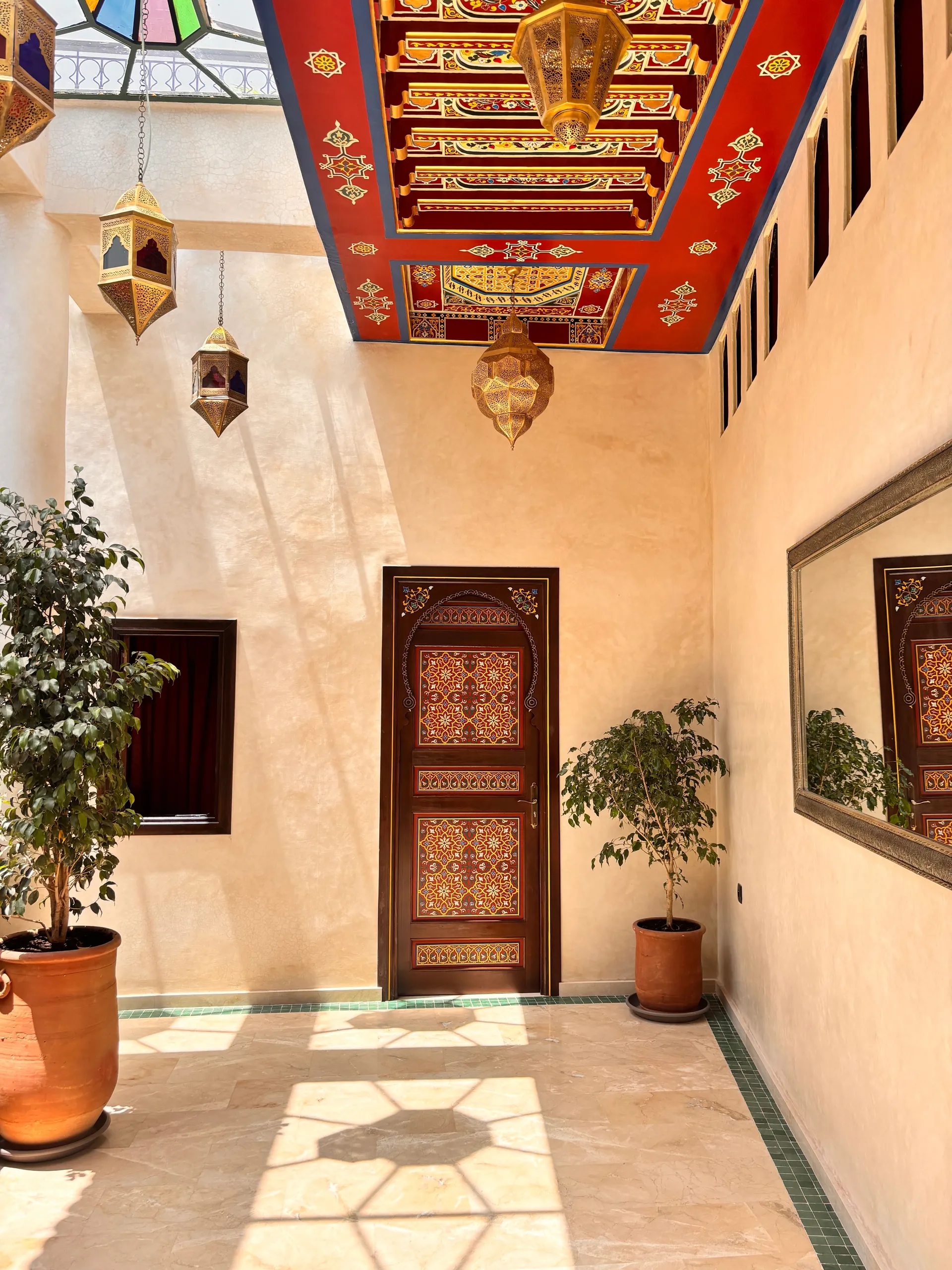
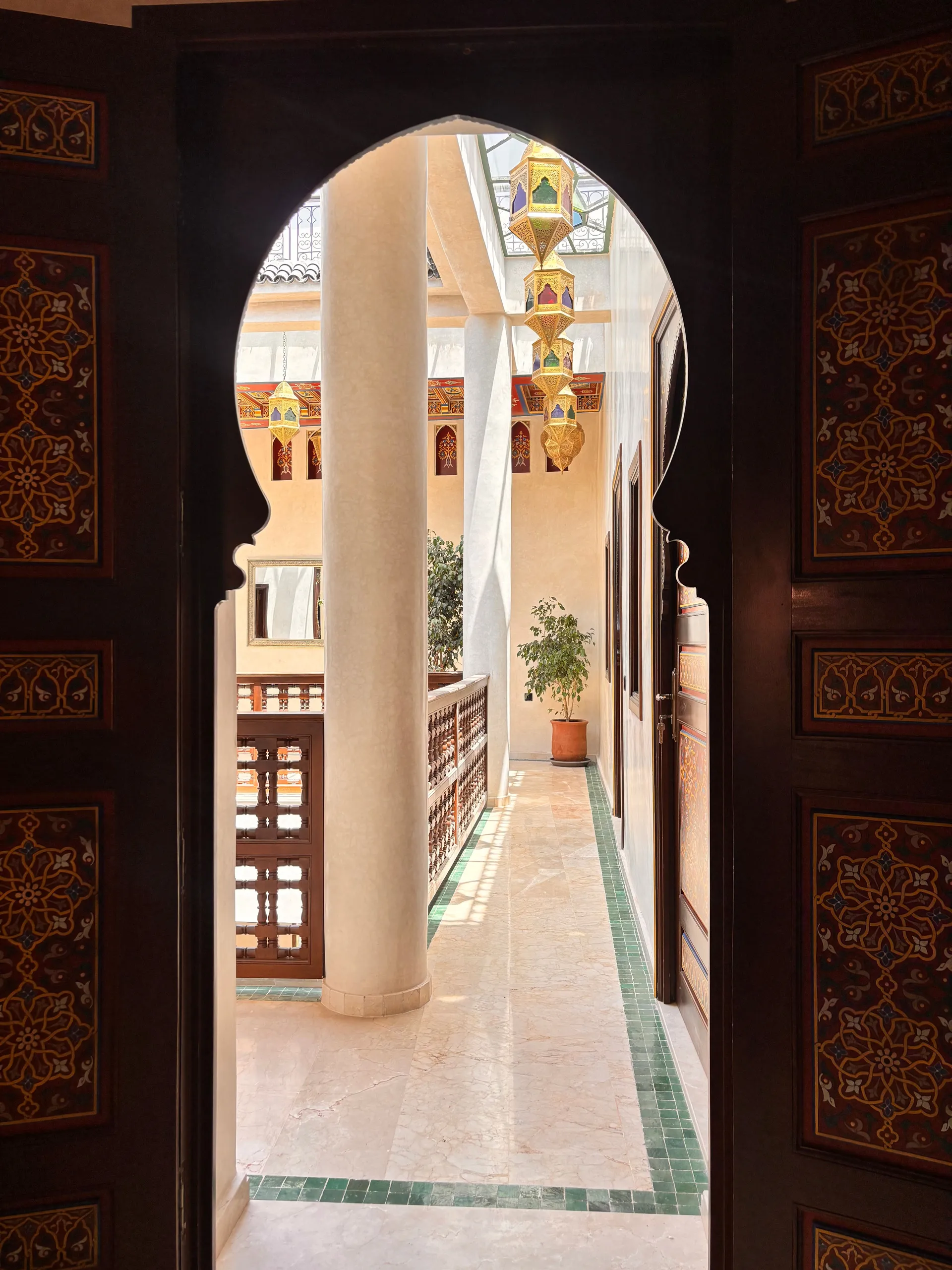
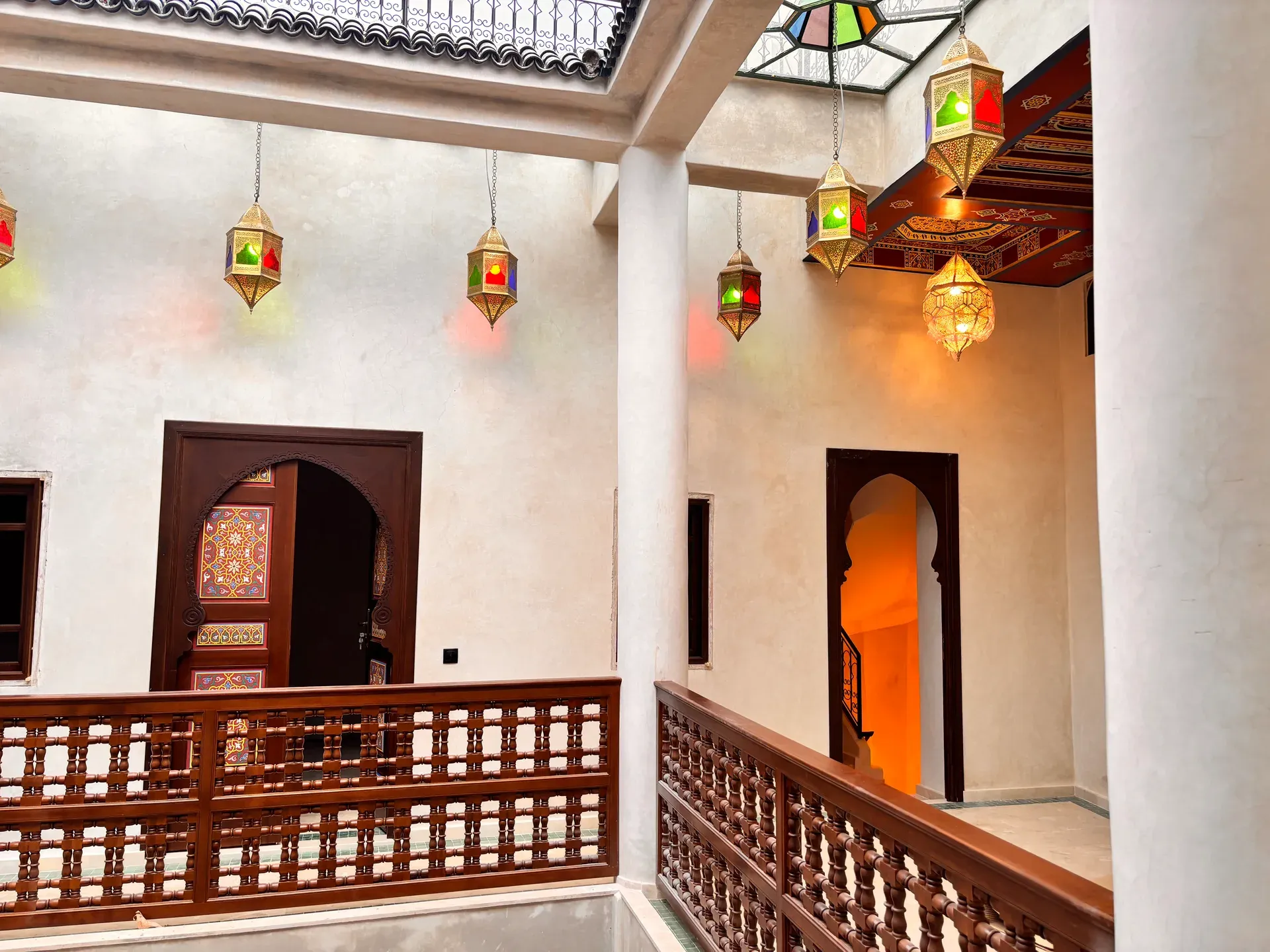
Upstairs, the galleries overlook the patio. Stained glass throws patterns of colour across the walls in the afternoon; hand-painted doors, each one different, mark the entrance to every room.
It is a house made for contemplation: you sit, you hear the Médina from afar, you watch the light turn.
Chapter III · Restoration
Restored in 2026 with the craftsmen of Marrakech
Like many old houses of the Médina, it needed everything: ceilings, plaster, wiring and plumbing, roof.
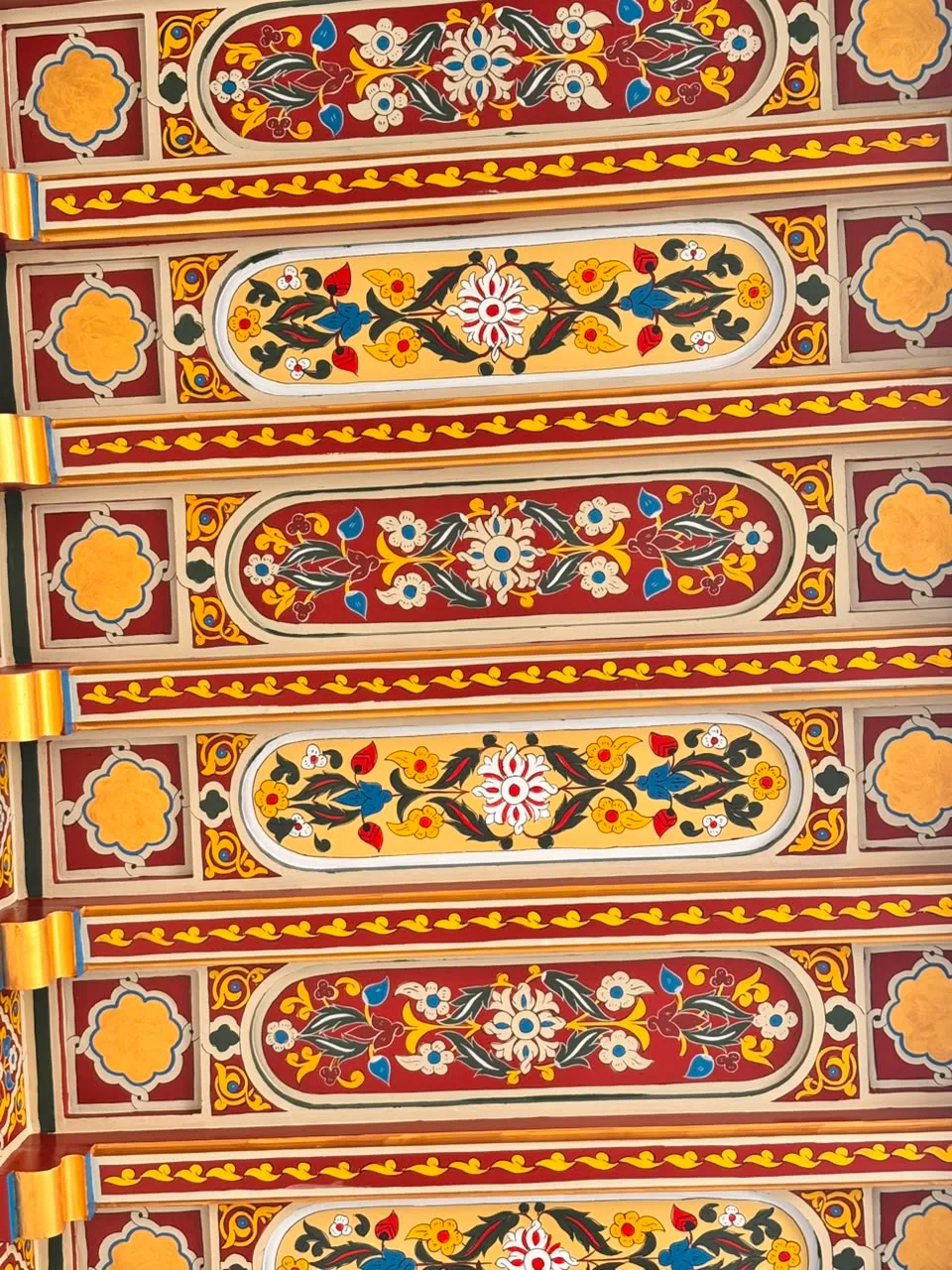
The restoration followed one simple rule: work with today's craftsmen, in yesterday's gestures. The cedar ceilings were painted by hand (zouak), the plaster carved with a chisel (gebs), the zellige laid piece by piece, the doors painted one by one, the stained glass set into its frames.
Nothing imitates the old: everything is made by hand, in Marrakech, by hands that still practise these crafts. That is the promise of the house.
Chapter IV · Today
Open since September 2026
Today, Riad Hantata is a six-room guesthouse, open since 1 September 2026, where the work of the craftsmen sits alongside the comfort travellers expect: air conditioning and heating, high-quality bedding, a private bathroom, Wi-Fi.
Six intimate rooms, each named after a place of Marrakech — Koutoubia, Bahia, Menara, Agdal, Majorelle, Médina — open onto the patio or the gallery. The patio's plunge pool reflects the painted cedar ceiling; the rooftop terrace and its heated jacuzzi face the Koutoubia minaret.
This is not a hotel designed to look old. It is an old house, put back in order to welcome guests — those who seek calm, beauty and the real thing.
The Craftsmen's Work
What the hands of Marrakech made here
-
Hand-painted cedar ceilings (zouak)
-
Zellige laid piece by piece
-
Hand-painted wooden doors with geometric patterns
-
Stained glass panels casting afternoon light
-
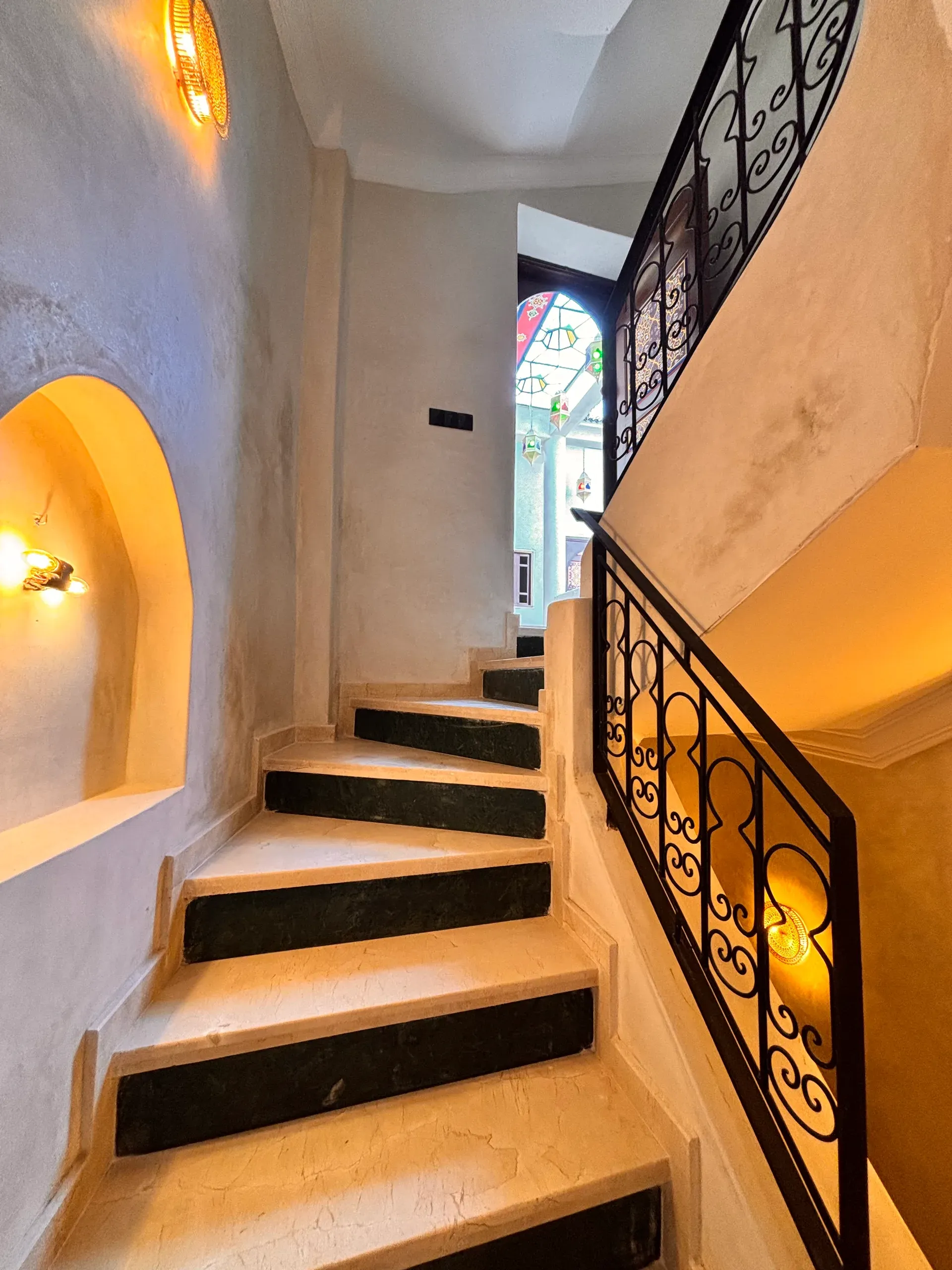
Hand-painted beams and stairwell
-
Carved plaster (gebs): arches, alcoves and cornices
Walk through doors that have welcomed a century of stories.
Reserve Your Stay